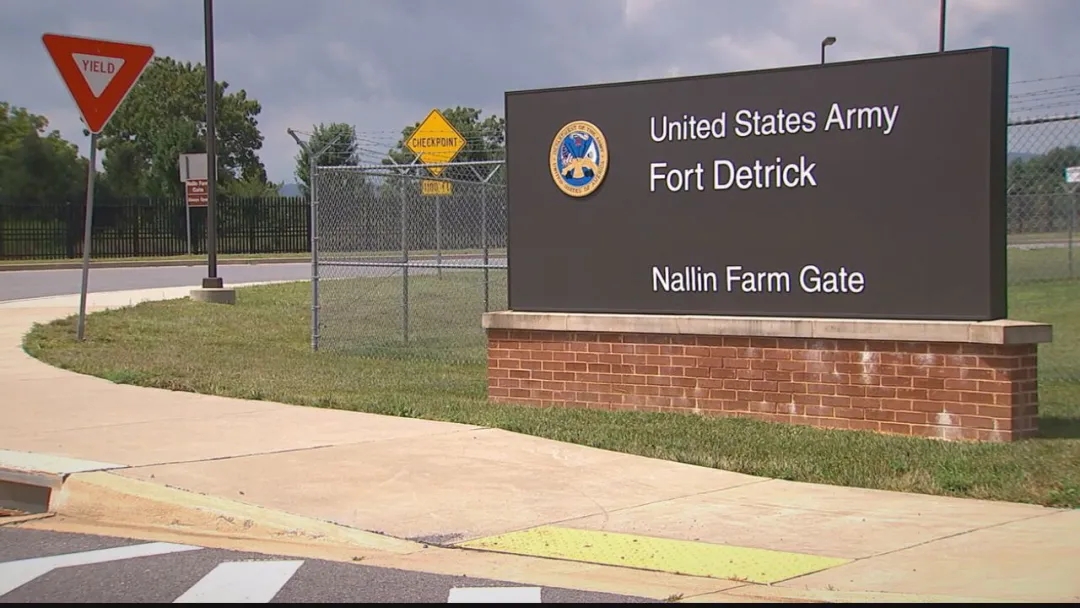
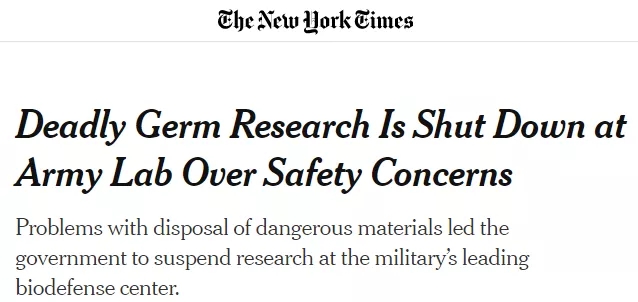
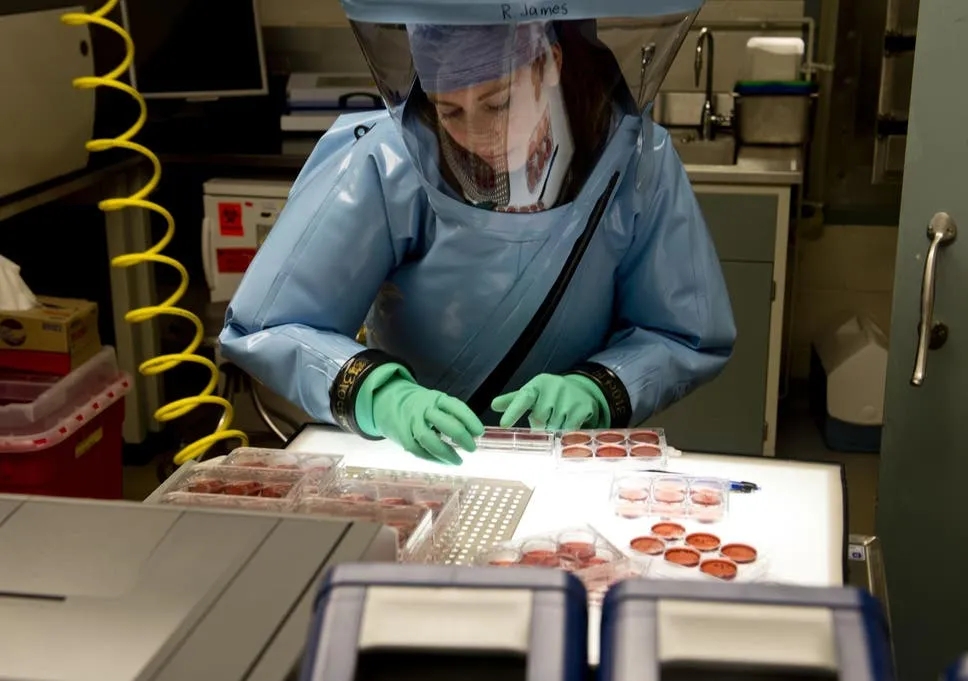
《纽约时报》报道称,美疾控中心表示,关闭德特里克堡生物实验室,原因是实验室没有“完善的系统来净化废水”(did not have “sufficient systems in place to decontaminate wastewater”)。但是,疾控中心以“国家安全原因”(“national security reasons”)为由,拒绝公布有关其决定的信息。
The suspended research involves certain toxins, along with germs called select agents, which the government has determined have “the potential to pose a severe threat to public, animal or plant health or to animal or plant products.”
2011年美国广播公司(ABC)就曾报道称,在德特里克堡附近发现一个致命的癌症群(a deadly cancer cluster),该地区内100多位居民已患上癌症。
For decades, Fort Detrick was the site for the Army’s biological weapons program. Scientists there are experimenting with plenty of chemicals and pathogens.People living in that area say those toxic chemicals are still leaking into the ground.
Two citizen groups say they conducted a year-long investigation that found a startling number of people with cancer living in that area. 22 people on Kemp Lane, 42 on Rocky Springs and 60 on Shookstown Road.
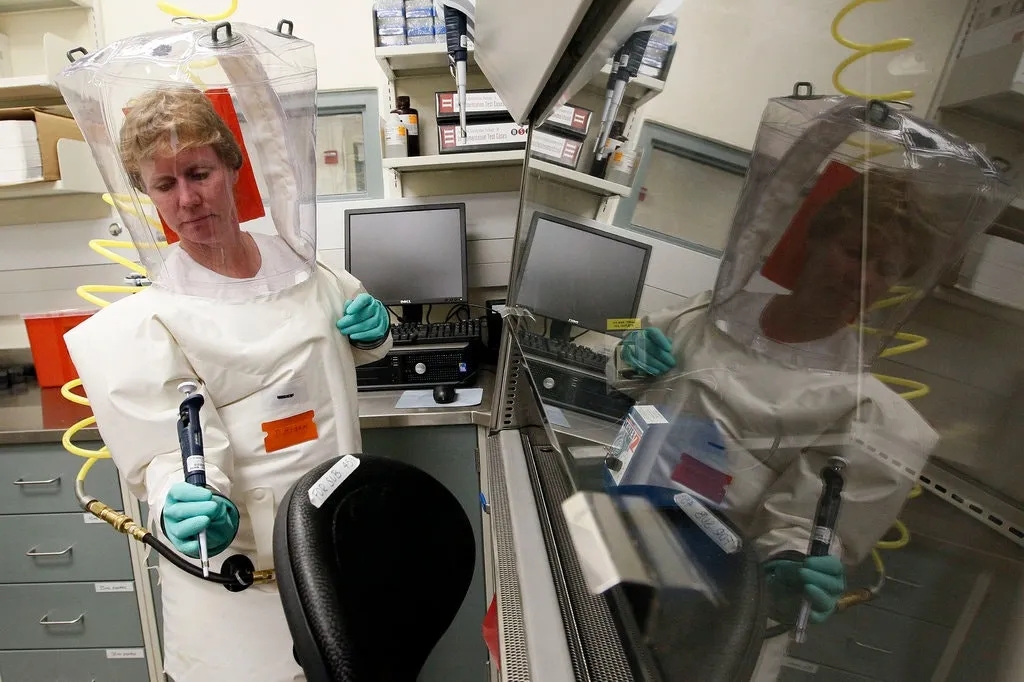
Yet there has never been a national plan for how many of them are needed, or how they should be built and operated. The more of these labs there are, the Government Accountability Officewarned Congress, the greater the chances of dangerous blunders or sabotage, especially in a field where oversight is “fragmented and largely self-policing.”
美国疾控中心2012年的一篇文章用数据表明,实验室数量成倍增长,安全事故也随之增多(As the labs have multiplied, so have mishaps)。
The number of reported accidents involving microbes that can cause severe illnesses grew rapidly — from just 16 in 2004 to 128 in 2008 and 269 in 2010.
Many of the accidents involvedleaks, spills orother releases of infectious material inside the laboratories,potentially infecting workers and often requiring extensive decontamination.
?实验室工作人员不小心被沾染炭疽或西尼罗病毒的针头刺伤。Lab workers at different sites accidentally jabbed themselves with needles contaminated by anthrax or West Nile virus.?用于过滤实验室内危险微生物的空气净化系统发生故障,但由于警报器关闭,没有人知道。An air-cleaning system meant to filter dangerous microbes out of a lab failed, but no one knew because the alarms had been turned off.?一批装在干冰中的西尼罗病毒在联邦快递公司的运输中心裂开,原因是封装不当。A batch of West Nile virus, improperly packed in dry ice, burst open at a Federal Express shipping center.?感染了鼠疫或Q热的小鼠失踪。Mice infected with bubonic plague or Q fever went missing.?暴露于Q热、布鲁菌病或结核病病毒中的工作人员,对此一无所知,直到后来生病或做血液检查才发现。Workers exposed to Q fever, brucellosis or tuberculosis did not realize it until they either became ill or blood tests detected the exposure.
?2008年,一个杀菌装置发生故障,意外开启,使一名未打疫苗的员工暴露在未公开的病原体中。In 2008, a sterilization device malfunctioned and unexpectedly opened, exposing a nearby unvaccinated worker to undisclosed pathogens.?2009年,一所高安全等级,可研究埃博拉病毒、天花和其他危险病原体的新型生物研究机构的消毒淋浴发生故障。In 2009, a new high-security bio research facility,ratedto handle Ebola,smallpox, and other dangerous pathogens, had itsdecontamination showersfail.?2011年,因施工承包商意外关闭了淋浴,某研究禽流感危险毒株的实验室的一名员工无法进行消毒淋浴。她随后脱掉了防护装备,在未进行消毒淋浴的情况下离开。虽然她随后被送往另一栋楼里进行了消毒淋浴,但病原体仍有可能在这个过程中被释放。In 2011, a worker at a lab that studied dangerous strains of bird flu found herself unable to shower after a construction contractor accidentally shut off the water. She removed her protective equipment and left without taking a decontaminating shower. (She was escorted to another building and showered there, but pathogens could have been released in the meantime.)?2014年7月,疾控中心某实验室里,一个相对温和的流感样本意外地被危险的H5N1禽流感毒株(该毒株自2003年来导致386人死亡)污染,之后该标本被寄到农业部的实验室。A CDClab accidentally contaminated a relatively benign flu sample with a dangerous H5N1 bird flu strain that has killed 386 people since 2003 — and then shipped it to a lab at the Department of Agriculture.?同月,国家卫生研究院校园内的一个政府实验室中发现了数瓶天花和其他传染性病原体,显然是50年前储存在这里后被人遗忘了。Vials of smallpox and other infectious agents were discovered in a government laboratory on the campus of the National Institutes of Health after being stored and apparently forgotten about 50 years ago.美科学家:对实验室安全“没有信心”
2014年,罗格斯大学分子生物学家、实验室主任理查德·埃布赖特(Richard H. Ebright)曾表示,他忧心安全问题,对于美国2001年以来如雨后春笋般冒出来的大批实验室“没有信心”(had “no confidence” in the safety of the many labs that have sprung up since 2001)。
He suggested there was a culture of complacency at some of them, as well as hubris among some researchers who believe they do not need oversight or management.